Distribution of ideas for living rooms according to each type of layout

How do you think about the living room before moving a single piece of furniture?
The living room is usually the most versatile space in the house: it receives visitors, acts as a rest area, sometimes integrates dining or working, and in many homes it also serves as the visual center of the house. Therefore, its distribution should not be decided solely by aesthetic taste. You must respond to levelfor circulation, for natural light and real use of space.
In interior architecture, good planning is not about filling a room with beautiful furniture; Organizing relationships: Between the sofa and the TV, between the seat and the window, between free passage and the focus point. AI-powered design tools, such as DecorGPT, help assess these relationships more accurately and quickly, testing configurations, proportions and paths before making final decisions. This does not replace professional judgement, but allows you to explore options more clearly.
Below, we review specific ideas for different types of plans, with workable solutions on the ground.
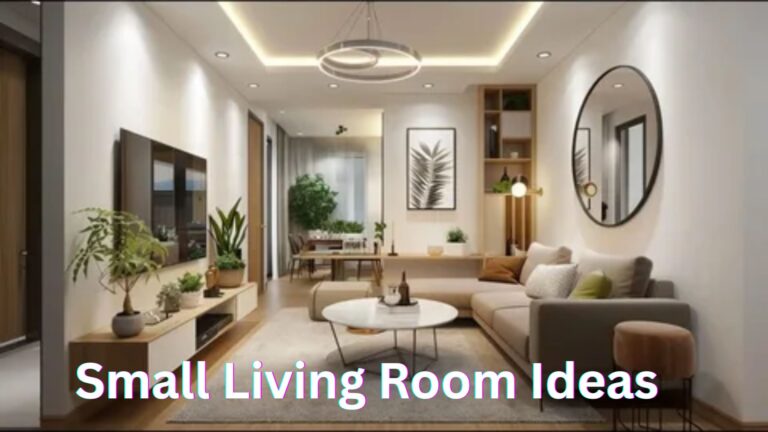
1. Small rooms: fewer pieces, better hierarchy
In small spaces, the most common mistake is trying to include too many elements. A small room does not need to give up comfort; needs Setting priorities.
Distribution switches
- Choose a master sofa in proportion Instead of several separate seats.
- Keep roads clear: Ideally, leave at least 70-90 cm of passage in circulation areas.
- Use visually light furniture: Exposed legs, small side tables and open shelves help the space breathe.
- Avoid focusing everything on the TV screen If this requires blocking doorways or windows.
What usually works
- Two- or three-seater sofa against a long wall.
- A small coffee table or even nesting tables to gain flexibility.
- Low-hung or visually very light TV cabinet.
- An additional seat only if it does not interfere with traffic.
In small rooms, AI can be useful for quickly comparing whether an “L”-shaped layout, a straight sofa with loose armchairs, or a more open combination is appropriate. Changing the position of a piece of furniture in a digital model avoids costly mistakes in construction or purchase.
2. Long rooms: divided without fragmentation
Long floor plans present a classic challenge: if furnished in a straight line, the space feels like an entryway; If it is overfilled, capacity is lost. The solution exists Create zones without closing the space.
Effective strategies
- Defines two functional areas: For example conversation and reading, or the main room and work corner.
- Use rugs to define boundaries Each area visually.
- Avoid placing all furniture close to walls; Sometimes a “floating” sofa helps compact the living area.
- Serve smaller pieces So as not to saturate the environment.
Recommended distributions
- Cross sofa: They are placed perpendicular to the long axis to visually shorten the room.
- Two regions in a row: One has a sofa and coffee table, the other has an armchair, a lamp and a bookcase.
- Linear composition with stops: Useful when there are windows or doors at both ends.
The elongated plane benefits greatly from the previous simulation. Using artificial intelligence tools, it is possible to check whether separation of regions improves spatial readability or, on the contrary, a continuous configuration is more appropriate. This reading is especially valuable when the space must serve more than one activity.
3. Open rooms: order without losing continuity
In open-plan homes, the living room shares lights with the dining room, kitchen, or even the work area. The challenge is not only in distributing furniture, but… Set soft boundaries.
How to achieve this
- Use the sofa as a transitional piece Between regions.
- Rely on carpeting, lighting, and furniture orientation To mark each post.
- Maintain consistency in materials and colors So that the whole does not seem fragmented.
- Do not block important sight linesEspecially towards windows, terraces or points of interest.
Good practices
- Position the back of the sofa toward the dining room to separate it without raising the walls.
- Incorporate a side table or low console behind the sofa to enhance the transition.
- Choose a specific floor lamp or pendant lamp to give priority to the living area.
- Reserve a clear circulation axis between the kitchen, dining room and living room.
In this type of plan, AI is particularly useful for testing relationships between regions. For example, it can help you check if the kitchen island is visually competing with the living room, or if an area rug that is too small makes the living area appear separate. These are subtle decisions, but they completely change the concept of space.
4. Square rooms: balance and focal point
Square rooms usually seem easy to solve, but precisely because of their symmetry they can become too rigid or fixed. The goal is to generate Balance without monotony.
Recommendations
- Create a clear center: It can be a coffee table, a rug or a fireplace.
- Distribution of seats around that pointand not necessarily all against the walls.
- Introduces controlled asymmetry With a lamp, armchair or decorative piece that has more presence.
- Avoid repeating identical spaces From all sides; A small imbalance can make a space more natural.
Helpful charts
- Main sofa + two opposite chairs.
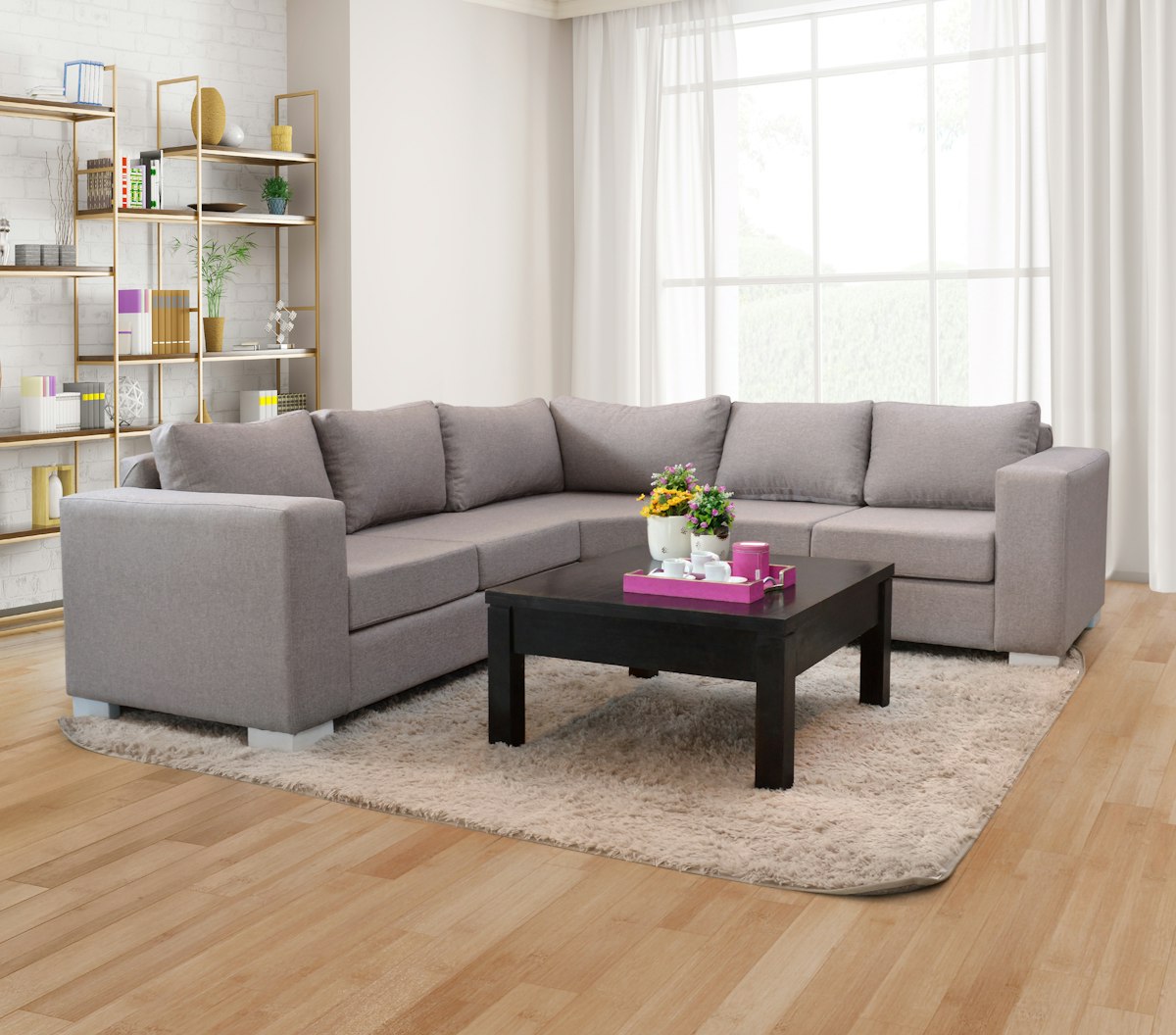
- L-shaped sofa with center table and side furniture.
- Symmetrical configuration if there is a fireplace or central window.
The advantage of a box chart is that it allows multiple variables. Through the support of artificial intelligence, it is possible to test whether a more formal or more relaxed design is appropriate, and see how the feeling of spaciousness changes depending on the position of the furniture.
5. Irregular rooms: benefit from shape instead of fighting it
Rooms with columns, setbacks, slanted walls, or unconventional angles often raise questions. However, these irregularities can become opportunities if read well.
How to process it
- Identify the most regular area To determine the main center of the room.
- Reserve difficult corners for secondary uses: Reading, storage, plants or auxiliary items.
- Do not try to visually “straighten” everything with large furniture; Sometimes it is convenient to follow existing geometry.
- Take advantage of niches and setbacks With custom shelves or integrated seating.
Common solutions
- The sofa is placed in the cleanest part of the perimeter.
- Custom low cabinet on an irregular wall.
- A seat or reading nook in an oversized nook.
- Simple contour rug to avoid enhancing visual clutter.
Here, AI design tools can save a lot of time. When modeling a plant, it is easier to discover which areas to highlight and which to neutralize. Instead of fighting form, analysis helps make it part of the composition.
6. Rooms with little natural light: distribution and perception
Light affects as much as size. A dark room can appear smaller than it is, especially if the furniture blocks the light or if the materials absorb too much.
What should be done
- Do not place tall furniture in front of windows.
- Choose light or medium finishes Which reflects light better.
- Arrange seating near natural lighting pointswithout invading them.
- Combining general, spot and ambient lighting To avoid boring corners.
Here also the distribution is important: if the sofa is placed in such a way that it blocks light, the environment loses its quality. The previous simulation allows you to check which configuration makes the room more open and bright.
General tips that work on almost any aircraft
Although each room requires a different solution, there are principles to remember:
- Respect circulation before symmetry.
- Determine a clear focal point: window, fireplace, TV or outside view.
- Measure furniture to the actual size of the space.
- Use rugs for organization, not decoration without function.
- Leave air around the main parts To avoid feeling saturated.
In real projects, the value of tools like DecorGPT is not only to generate attractive images, but to help evaluate the plant according to spatial criteria: proportions, paths, hierarchies, and compatibility between uses. This technical reading, combined with design sensitivity, allows you to make better decisions from the beginning.
conclusion
The best living room design is not based on one formula, but rather on understanding the type of floor plan and the needs of the home. Small space requires precision. Elongated smart segmentation; One open and precise border; One square, balance; And irregular applied creativity.
Thinking about the room through the layout, not just the furniture, completely changes the outcome. With the support of digital tools and artificial intelligence, exploring variables becomes faster and more rigorous. This, in interior architecture, usually translates into spaces that are more comfortable, functional and coherent with everyday life.