Loft Living: How to Design an Industrial Open Space

Loft living: much more than just leaving the space open
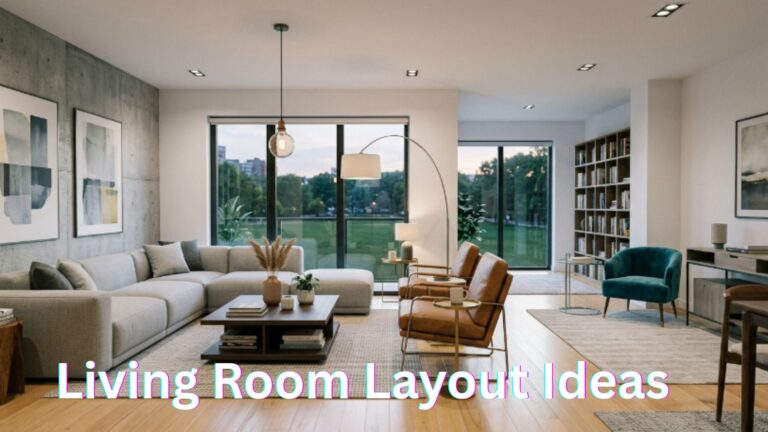
The loft has become one of the most sought-after models by those looking for space, character and a contemporary aesthetic. Its industrial origin – converted warehouses, old warehouses or repurposed factories – explains much of its charm: high ceilings, exposed structures, large openings and a layout devoid of strict division.
But loft design is not only limited to that Remove partitions. A good industrial open space must balance three goals simultaneously: Function, comfort and character. If one of these devices fails, the result can be an environment that is stunning in photos, but uncomfortable in everyday use.
In this article we look at how to approach loft design from a practical perspective, with useful criteria for architects, interior designers and owners who want to get the most out of this type of home.
Understand the logic of the space before intervening
The first rule in the loft is not to impose a traditional distribution on a floor that does not ask for it. Before you decide where each use will go, it is helpful to study:
- Space engineering: Proportions, depth, free height, and the relationship between filled and empty areas.
- Entry of natural light: The direction, size of holes, and the path of the sun during the day.
- Existing itemsColumns, beams, channels, load-bearing walls, exposed structures, and original fabrics.
- Users’ way of life: If they cook a lot, if they work from home, if they receive visitors, if they need privacy or silence.
This is where AI-powered analysis and visualization tools, like those offered by DecorGPT, can add value early on. It does not replace architectural standards, but it helps Compare distributions, detect usage conflicts, and explore spatial variables quickly.
Open areas, yes; But with a hierarchy
One of the most common mistakes in loft design is to confuse openness with the absence of order. In fact, a good loft is needed Spatial hierarchy. Although there are no traditional sections, the user should clearly understand where each activity begins and ends.
How to organize a loft without closing it
- Uses compatible with the collection: The living room and dining room can share the same space; The kitchen and service area could be closer.
- Use elevation or curb changes To mark transitions without losing visual continuity.
- Work with furniture as boundary elements: Open shelves, kitchen islands, sofas or low panels can define areas.
- Take advantage of the structure: A column or beam can become a reference for organizing the floor plan.
- Maintain privacy where it matters: A bedroom, bathroom, or work area typically requires more audio and visual control.
The key is for the space to be read as a cohesive whole, not as a series of isolated pieces or as an indeterminate void.
Light as project material
In the loft, the light not only illuminates: Space building. Since there are fewer partitions, natural light circulates more freely, but important challenges also arise, such as glare, lack of thermal control or uneven lighting between zones.
Good practices for working with lighting
- Enhances side and overhead lighting If present: High windows, skylights or glass panels can change the perception of volume.
- Avoid blocking light paths With solid pieces or high stocking near the gaps.
- Combines general, spot and ambient lighting To adapt the environment to different times and uses.
- Use consistent color temperatures– A chaotic mix of cool and warm tones can break up the unity of a loft.
- Integrates solar control With technical curtains, blackout curtains or filters that maintain the industrial aesthetic without sacrificing comfort.
It is good practice to analyze the behavior of light throughout the day before determining the final distribution. Digital simulations, including those powered by artificial intelligence, allow areas of increased or decreased light to be predicted and decisions can be adjusted more precisely.
Synthetic materials: authenticity without coldness
Industrial language is usually associated with concrete, steel, exposed brick, old wood and glass. However, the loft should not look like a rigid decoration. The goal is to maintain Physical authenticity Without falling into a harsh or overly impersonal aesthetic.
Material that works particularly well
- cement: Provides continuity, strength and a neutral base, but must be balanced with warmer textures.
- Black or galvanized steel: Ideal for carpentry, railings, profiles or structural furniture.
- Exposed brick– Adds memory and texture, especially if kept in its original condition or handled wisely.
- wood: Essential to provide visual and tactile warmth.
- glass: Allows you to separate without losing space or light.
The combination of materials must respond to a clear logic. It’s not just about adding “faux” finishes, it’s about building a balanced palette. A loft with too much solid texture can be tiring; A person who is too neutral can lose his identity.
Acoustic comfort: the big invisible issue
The aesthetics of a loft usually get all the attention, but acoustic comfort is crucial for the space to function. By removing partitions, the propagation of sound is amplified: conversations, appliances, television, music or household activity are perceived at full volume.
Useful strategies for improving vocals
- Insertion of absorbent surfaces In textiles, carpets, curtains or integrated acoustic panels.
- Avoid large parallel solid planes That generates excessive resonance.
- Separate noise sources: The washing machine, hood, air conditioning equipment or working area should not coexist without standards.
- Use soft furniture and porous items To mute the sound.
- Design of partial closures In bedrooms or offices if the program requires it.
At this stage, audio simulation and spatial analysis tools can be very useful to evaluate scenarios before carrying out work. A decision that seems aesthetically pleasing – for example, leaving a double height completely open – can have important consequences in everyday use.
Furniture: Fewer pieces, better choice
In the loft, the furniture has an architectural role. It not only saves space: Structuring it. For this reason, it is advisable to choose a few pieces, but with intention.
Criteria for choosing furniture in the loft
- Suitable scale: A very small piece is lost; One excessive one breaks the ratio.
- Multiple functionBenches with storage, extendable tables or mobile units help to gain flexibility.
- Coherent language: It is advisable to avoid mixing too many styles if the space already has a strong identity.
- Ability to define ranges: A sofa can define a living room. An open bookcase can act as a filter between the bedroom and the living room.
It is also important to allow the space to “breathe.” The overloaded loft loses its main virtue: the feeling of spaciousness.
Privacy without giving up continuity
Many users choose the loft for its openness, but then need to solve privacy issues. The solution is not always to upload entire partitions. There are very effective intermediate resources:
- Sliding panels Of glass, wood or perforated metal.
- Oversized curtains To be divided temporarily.
- Semi-transparent nets or filters.
- Built-in folders That focuses on the bathroom, storage or utilities and frees up the rest of the space.
- Furniture direction changes To suggest boundaries without closing them.
This type of solution allows you to maintain visual continuity and at the same time adapt the space to different times of the day.
How to think about a loft using digital tools
Loft design requires making many interconnected decisions: layout, lighting, acoustics, materiality, privacy and circulation. Therefore, it is increasingly useful to rely on digital tools that allow this Test variables before construction.
Platforms like DecorGPT, based on artificial intelligence, can help:
- Explore different distributions in a short time,
- Detect conflicts between uses,
- Compare zoning alternatives,
- Visualize how space behaves with different lighting conditions,
- And better communicate the proposal to customers or technical teams.
The advantage is not in design automation, but in… Gain the ability to analyze and iterate. In a loft, where every decision affects the entire unit, this flexibility is especially valuable.
Conclusion: The best loft is the one where you live well
A well-designed loft is not just an open space with an industrial aesthetic. It is an environment where spaciousness does not sacrifice comfort, where materials are cohesive, where light is used intelligently and where each area finds its place without having to be overly divided.
The key is to design to standards, not clichés. This means monitoring how the space is used, anticipating problems and adjusting every decision to match the real lives of its residents. In this process, digital support tools can speed up exploration and improve accuracy, but they are always in the service of a clear architectural idea.
In short, a contemporary loft works when it combines freedom and order, personality and warmth, openness and control. This balance is what turns a converted warehouse or open plan into a true home.