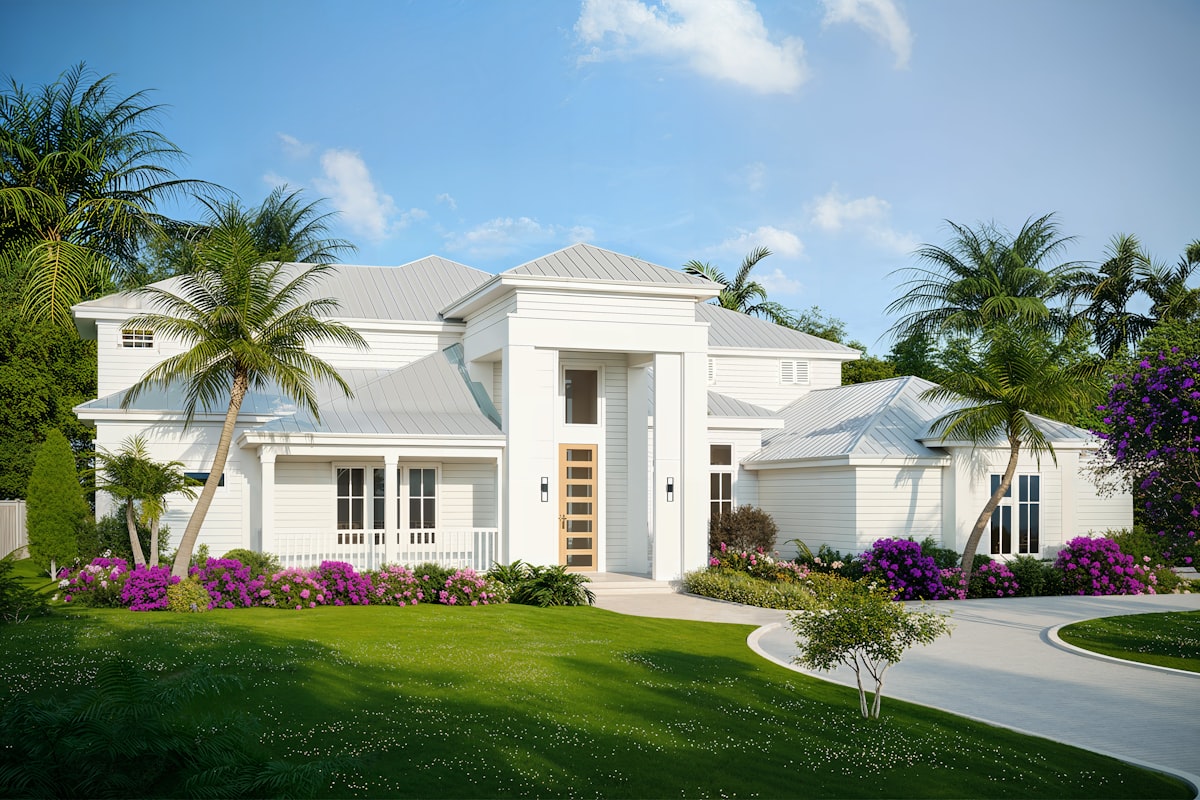
Coastal Home Design: Bringing the beach to your door
A way of inhabiting the landscape
Coastal home design is not just about “decorating with beach air.” It is about creating a home that is in dialogue with the environment, withstanding challenging conditions and, at the same time, providing a daily feeling of calm, freshness and connection with the outside. Good coastal design combines beauty, function and durability: three aspects that, when well balanced, make the experience of living by the sea truly enjoyable.
The coast inspires with its light, natural colors and slower pace. But it also poses specific challenges: humidity, salinity, wind, intense solar radiation and, in some cases, exposure to storms. Therefore, a well-designed coastal home does not rely on visual clichés; It depends on smart decisions from planning to finishes.
Start with the weather and orientation
Before considering colors or furniture, it’s a good idea to study how the house behaves in the face of sun, wind and views. In coastal areas, orientation can significantly improve thermal comfort and quality of daily life.
Key aspects of the review
- Entry of natural light: Benefit from it without generating high temperature.
- Dominant winds: Facilitate cross ventilation and protect the most exposed areas.
- Main views: Orient frequently used rooms towards the sea or the most valuable landscape.
- Outdoor shade: Integrating balconies, eaves, or pergolas to control radiation.
This is where AI-powered design tools, like DecorGPT, become especially useful. They do not replace architectural standards, but they help to quickly explore the variables of orientation, distribution and opening of openings to compare the best solution that responds to the climate and real use of the house.
Materials that age well near the sea
One of the most common mistakes in coastal housing is choosing materials based on their initial appearance, without considering how they will behave over time. Salt, humidity and sun are more dangerous than other environments, so material selection should prioritize resistance and ease of maintenance.
Practical recommendations
- Treated wood or stabilized species: Ideal in areas protected from direct contact with water and rock salt.
- Natural stone or porcelain exterior: Provides durability and good response to moisture.
- Corrosion resistant metals: Marine stainless steel, high quality anodized aluminum or specified coastal hardware.
- Breathable paints and coatings: Helps prevent condensation and premature deterioration.
- Technical textilesIn terraces and outdoor spaces, it is recommended to use fabrics designed for outdoor use.
Beyond aesthetics, the key is to consider maintenance cycles. A well-designed coastal home should not require constant interventions to maintain its appearance. The stronger and more consistent the materials are, the longer the house will retain its spatial quality.
Natural light but no glare
One of the great attractions of living by the sea is the coastal light. It is intense, variable and very expressive. However, if left unattended, it can cause glare, excess heat, and eye strain.
To make the most of it, it is recommended to work with a range of resources:
- Wide openings, but well protected.
- Solar filters Such as grilles, slats, technical curtains or sliding panels.
- Light colors on interior walls To bounce the light softly.
- Depth of holes and slots To create shadow and transition between inside and outside.
In contemporary projects, the distribution of openings can be studied using numerical simulations that help predict how light will enter at different times of the day. This type of analysis, powered by artificial intelligence, allows more accurate decisions to be made in the early stages and avoids exposed or inconvenient solutions.
Cross ventilation and passive comfort
In a coastal home, natural ventilation is not a luxury: it is a convenient strategy. It allows you to cool the home, reduce dependence on mechanical systems and improve the feeling of well-being.
Good design practices
- Align the slots opposite To enhance air passage.
- Create ventilation routes Between common areas and bedrooms.
- Avoid excessive partitioning Which prevents air flow.
- Use patios, double heights or interior spaces As thermostats.
Cross ventilation works best when combined with a clear, flexible floor plan. Coastal homes often benefit from open layouts, where the kitchen, dining room, and living room visually connect to the porch or balcony. This continuity not only expands the perception of space, but also improves air circulation and connection to the outside.
Internal and external as one system
One of the hallmarks of good coastal design is continuity between indoors and outdoors. It’s not about completely erasing boundaries, but about gently designing them.
The resources needed to achieve this
- Oversized sliding doors Which opens the house towards the balcony.
- Continuous pavements or similar tone Between internal and external.
- Light and versatile furniture Which can adapt to changing uses.
- Covered balconies and terraces As medium-sized areas suitable for habitation.
This approach encourages a more relaxed and sociable lifestyle. The house expands into the environment and allows everyday activities – reading, eating, resting and receiving visitors – to occur at different levels of relationship with the landscape. Architecturally, the value is in designing the transitions, not just adding metres.
Environmentally inspired color palette
Color in a coastal home should not compete with the landscape, but rather accompany it. The most effective paintings usually start with natural colors and calm atmospheres.
Panels that work well
- Warm white and light sand To enhance light.
- Soft gray and stone To provide sobriety.
- Desaturated blue or muted green Secret accents.
- Natural forests To add warmth and texture.
It is advisable to avoid excessively strong contrasts, especially in small spaces or highly exposed to sunlight. The neutral base allows light, sky and sea to change, and the house can be seen differently throughout the day without losing cohesion.
Details that make the difference
In coastal architecture, small details have a big impact. Good design can fail if aspects such as storage, resistance to carpentry or protection of entrances and building facades are not taken into account.
It is worth paying attention to:
- Spaces to store towels, beach items and outdoor equipment.
- Transition areas to leave sand and moisture behind before entering.
- Joinery and joints are well sealed Against wind and salinity.
- Proper drainage on terraces, outdoor bathrooms and entrances.
- Warm and practical outdoor lightingdesigned for night use without visually polluting the landscape.
A well-thought-out coastal home also anticipates actual use: frequent entrances with sand, wet clothes, seasonal objects and a more intense indoor-outdoor life than in other contexts. Design suitable for everyday life is what turns a beautiful home into a comfortable home.
The role of artificial intelligence in coastal design
Artificial intelligence is changing the way we explore architectural alternatives. In coastal projects, it can help to quickly evaluate implementation options, study sunlight, compare distributions, or discover more efficient solutions depending on climate and application program.
Platforms like DecorGPT allow you to deal with this complexity in a clearer and more flexible way, especially when you have to balance multiple variables: views, ventilation, privacy, orientation and maintenance. The advantage is not in automating design, but in expanding the field of possibilities and making better informed decisions.
Conclusion: Design to live better by the sea
Bringing the beach to your door doesn’t mean imitating a vacation aesthetic. It means building a home that embodies the best of the coastal environment – light, spaciousness, serenity and relationship with the outside – without neglecting its technical requirements.
A well-designed coastal home should be durable, fresh, bright, and easy to maintain. It must respond to the climate without losing warmth, and provide spaces capable of adapting to a more open and flexible life. When materials, orientation, ventilation, and layout work together, a home not only looks good, it lives better.
This is ultimately the true essence of coastal design.