How to design a multi-generational home that works for everyone
Understand what a multi-generational home needs
Designing a multi-generational home isn’t just about adding bedrooms. It simultaneously means resolving issues of coexistence, privacy, accessibility, security and flexibility. When grandparents, parents, children, and, in some cases, other relatives share a home, the architectural project must anticipate different routines, different schedules, and very diverse levels of autonomy.
A well-thought-out multigenerational home can improve the quality of life for everyone: it reduces travel, facilitates mutual care, and improves the use of space. But to truly succeed, design must start from a key question: How does each person live inside the home and how does he interact with others?
This is where AI-powered design tools, like those used by DecorGPT, come in particularly useful. It does not replace architectural judgment, but it helps explore layouts, spot distribution conflicts, and quickly compare alternatives before making costly decisions.
Start with the uses, not the form
Before thinking about styles or facade, it is advisable to determine the real program of the house. In a multi-generational home, the number of people is less important than their habits.
Practical questions to answer
- Who needs more privacy and who can share more space?
- Are there elderly people with limited mobility?
- Are there members working from home?
- Is a separate area needed for longer visits or caregivers?
- What activities generate noise, odors, or frequent traffic?
With these answers, the project ceases to be abstract and becomes a concrete organization of needs. For example, a family with self-employed grandparents may prioritize a ground floor suite, while another family with teenagers who work remotely may need to clearly separate study and rest areas.
The key is the balance between privacy and coexistence
One of the most common mistakes in this type of housing is to assume that “shared space” always improves coexistence. In fact, a shared home works best when available Meeting and pickup options.
Well located common spaces
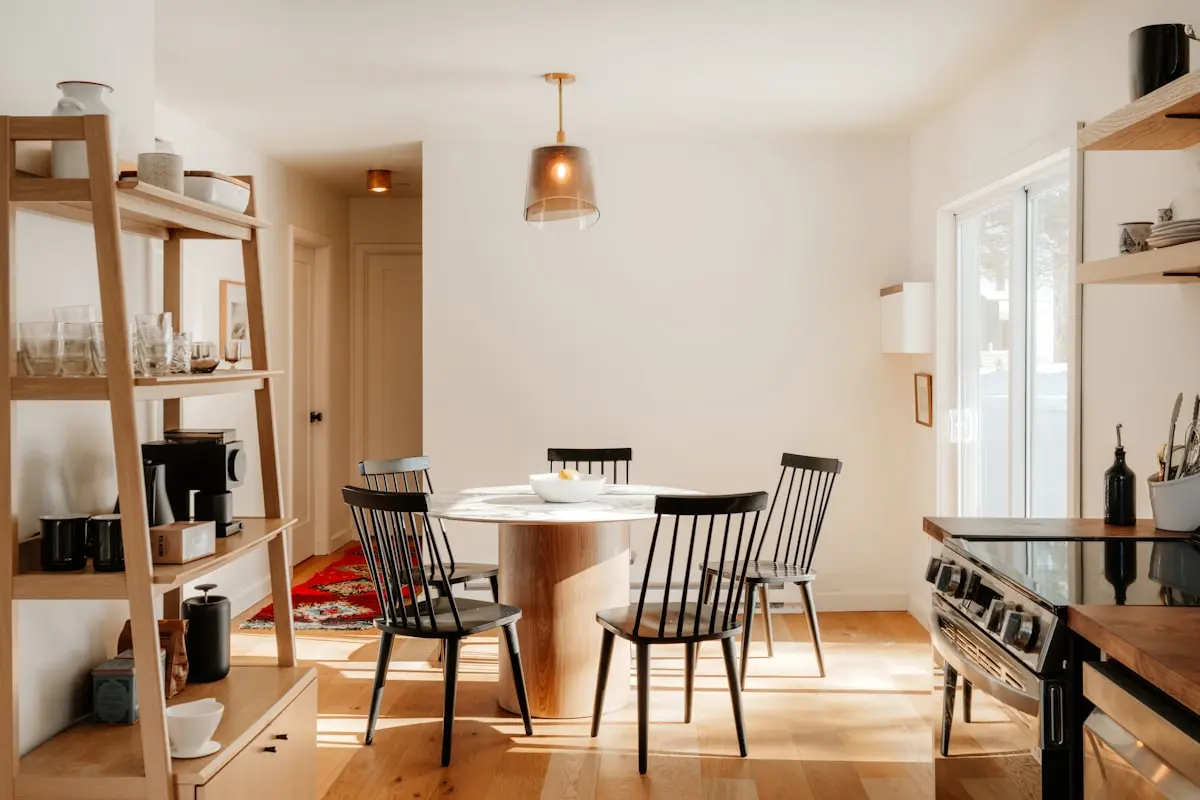
The kitchen, dining room and living room are usually the heart of the house. But it should not become a permanent crossing point. They should be organized to facilitate the meeting without invading the rest of the house.
Some useful strategies:
- Locate social areas in a central or clearly identifiable area.
- Prevent access to bedrooms from forcing you to cross the most active space.
- Incorporate transitions, such as halls, wide corridors or small distributors.
- Use sliding doors, panels or furniture to adjust the visual opening.
Truly private, protected areas
Every generation needs moments of calm. This does not always mean separate wings, but it does mean clear boundaries. A bedroom with its own bathroom, a small private living room or a separate study can make a big difference.
Privacy also depends on voice control. In shared housing, isolation between bedrooms, bathrooms, and areas of intense use must be taken care of from the beginning. Good acoustic design avoids everyday stresses that are difficult to correct later.
Think of the home in terms of universal accessibility
It should serve a multi-generational home today and in ten or twenty years. Therefore, accessibility should not be treated as an afterthought, but as part of the basic concept.
Accessible design basics
- Step-free access Or with well-resolved stairs.
- Wide doors For comfortable mobility of wheelchairs, walkers or strollers.
- Generous aisles And enough turns at key points.
- Adaptable bathroomsWith room to maneuver and walk-in shower.
- Bedroom on the ground floorEspecially useful for the elderly or for temporary recovery.
In addition to meeting technical standards, these decisions provide comfort for everyone. A wider doorway makes it easier to move furniture, a frameless shower improves hygiene, and constant access to the outdoors makes the home more usable for children, seniors, and people with temporarily limited mobility.
Design generalizations that do not express unnecessarily
In a multi-generational home, distribution is as important as room distribution. When paths overlap too much, conflicts increase: noise during off hours, constant interruptions or a feeling of invasion.
Good trading practices
- Separate access to private areas, as much as possible, from access to common areas.
- Prevent the path leading to the kitchen, laundry or patio from passing in front of bedrooms.
- Designing secondary entrances if the plot of land and budget allow it.
- Providing storage places near points of use to reduce unnecessary trips.
In complex projects, flow simulation can be of great value. An AI-powered design environment allows you to evaluate how different people in the home will move according to schedules and uses. This helps in detecting bottlenecks or difficult connections before construction.
The kitchen as a space of negotiation
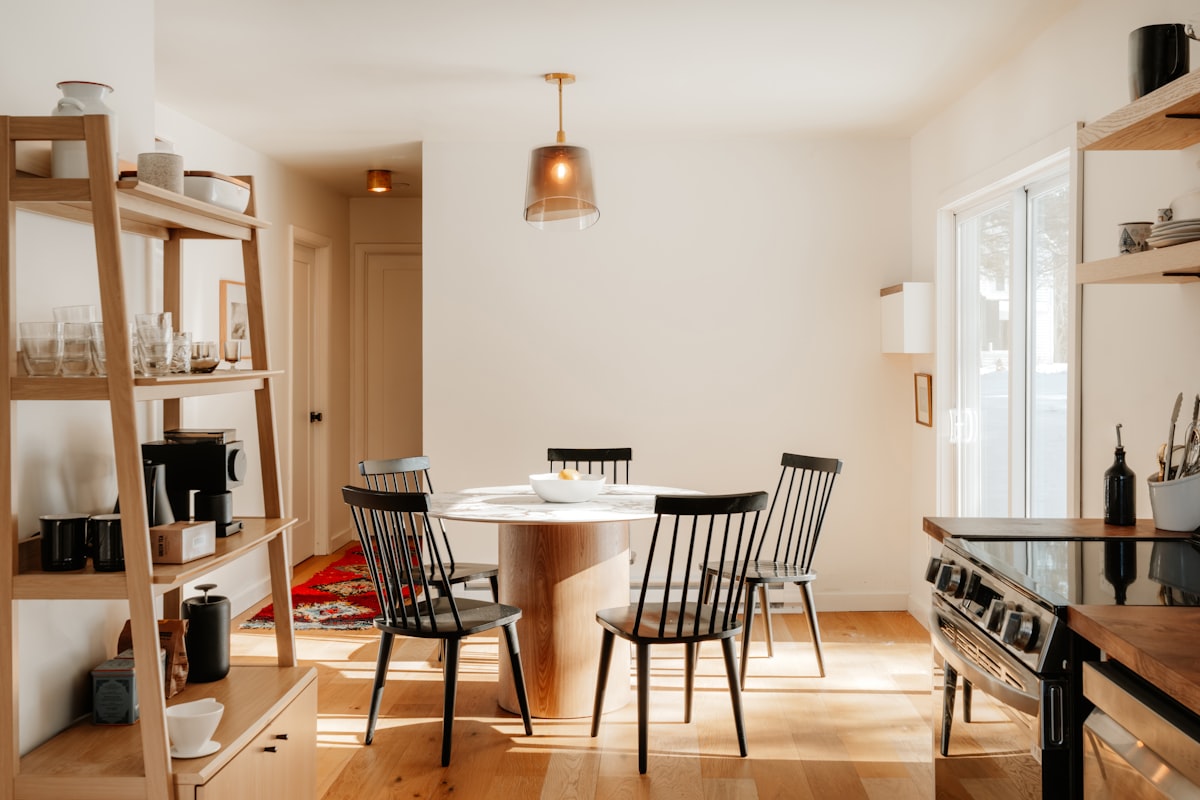
Few rooms focus on as many projections as the kitchen. In a multi-generational family, it can be a place to meet, work, provide care support and prepare meals at different times.
Therefore, instead of a “big” kitchen, a galley usually works better. Well customized.
What to expect
- Separate preparation areas to avoid interference.
- Sufficient storage space organized by users or by frequency of use.
- Work surfaces at different heights if the project allows.
- Good ventilation and extraction to prevent the spread of odors.
- An additional table or bar allows you to eat, help the children or chat without disrupting the main process.
In some cases, a semi-open kitchen offers the best balance: maintaining a relationship with the social area, while allowing some visual and acoustic control.
Flexibility: real value in the long term
Families change. Children grow up, grandparents grow older, someone starts working remotely, or a new member arrives. A multi-generational home should be able to adapt without extensive renovations.
Architectural resilience resources
- Multi-purpose rooms can be a bedroom, study or guest room.
- Minimal fixed furniture in areas that may change in use.
- Installations designed for future modifications.
- Lightweight partitions or removable systems in secondary areas.
- Spaces “reserved” for potential expansion or division.
This approach prevents the house from becoming outdated. It also improves sustainability, as it extends the useful life of the building and reduces the need for major interventions.
Materials, light and environment: what also affects coexistence
Although design is sometimes thought to be the only deciding factor, the indoor environment greatly influences the daily experience.
Three aspects should be paid attention to
- Natural light: Improves well-being and helps target frequently used areas.
- Resistant and easy-to-maintain materials: Especially in high traffic areas.
- Cohesive end panel: It avoids the feeling of fragmentation between shared and private spaces.
Lighting can also help with home organization. Warm and harmonious light in the common areas, as well as specific lighting in the reading or working areas, allows each generation to adapt the space to its routine.
How does artificial intelligence help in this type of project?
Designing for multiple generations involves managing many variables simultaneously. This is where AI adds value without replacing the sensitivity of the architect.
Platforms like DecorGPT can help with:
- Try multiple distributions in less time.
- Compare options based on privacy, accessibility, or efficiency.
- Detect conflicts between circulatory flows.
- Visualize spatial relationships before getting into construction details.
- Iterate using real usage data, not just intuition.
The advantage is not in design automation, but in… Make better decisions earlier. And in multi-generational housing, this can make the difference between a home that “fits” perfectly and one that actually works.
Bottom line: Design for living together, not just for adapting
A successful multi-generational home is not one that brings more people under one roof, but one that allows each person to live in dignity, comfort and independence. This requires thinking about privacy, accessibility, flexibility and spatial relationships from the beginning.
When the design is supported by alternative analysis, simulation and exploration tools, the process becomes clearer and more precise. This benefits everyone: those who share the home today and those who will use it in the future.
In short, designing a multi-generational home is designing for a small community. Like any community, it needs clear spatial rules, meeting spaces, and space to develop.