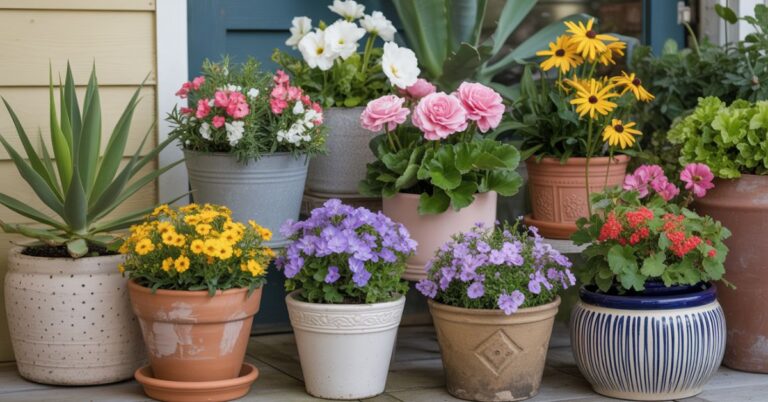
Edible Gardens: Landscaping that can also be eaten

From ornamental garden to productive landscape
For years, exterior design has been divided between… decor And this Functional. On the one hand, gardens are designed to be admired; On the other hand, orchards were relegated to the utilitarian corner. However, this separation no longer responds to current priorities: sustainability, partial self-sufficiency, well-being, and intelligent use of space. In this context, Edible gardens They are combined as a solution of high architectural and environmental value.
An edible garden is not just “growing vegetables in the yard.” It is a design strategy that integrates food species – fruit trees, aromatics, vegetables, edible flowers and perennials – within a cohesive natural composition. The result can be as aesthetic as it is productive, as long as it is planned according to spatial, climatic and maintenance standards.
What makes an edible garden work?
The key is to understand that the edible space must solve several layers at once:
- Food function: Production of fresh food, even partially.
- Aesthetic value: Maintaining an attractive visual composition throughout the year.
- Climate adaptation: Response to orientation, sun, wind and water availability.
- Realistic maintenance: Adapting to the user’s time and resources.
- Architectural integration: Dialogue with the house, roads and living areas.
When any of these aspects are neglected, the garden usually deteriorates quickly: either becoming unproductive, losing its shape, or requiring more maintenance than the family can handle.
Designing with Layering: The Logic of the Edible Landscape
One of the most effective strategies in this type of project is to work it out Plant classesIt also occurs in natural ecosystems.
1. Top layer: structure and shadow
Here it comes Fruit trees And some large species. In addition to production, they provide shade, control solar radiation, and help define space. In warm climates, well-placed glazing can significantly improve the thermal comfort of patios and terraces.
Practical recommendation:
- Locate deciduous trees to the south or west in climates with intense summers, to provide shade in the warm season and allow sun through in the winter.
- Avoid species with aggressive roots near foundations, sidewalks or pipes.
2. Middle layer: Useful shrubs and productive borders
Edible or aromatic shrubs are excellent for creating transitions between areas. Types include such as Rosemary, lavender, currant, raspberry or blueberrydepending on the weather. This layer provides volume, defines paths, and can act as a visual filter.
Architectural feature: It allows you to design living edges instead of solid enclosures, generating more permeability and a sense of continuity with the environment.
3. Low layer: vegetables, ground cover and flowering
At the lowest level are short-cycle species: Lettuce, chard, strawberries, arugula, chives, basil. Edible ground covers or flowers that attract pollinators, such as nasturtiums or marigolds, can also be included.
This layer is the most dynamic: it changes with the seasons and requires rotational planning to avoid soil depletion and maintain continuity of production.
4. Vertical layer: walls, pergolas and climbers
When space is limited, verticality is crucial. Beans, peas, grapes, kiwi or cucumber It can grow on light structures, integrated into pergolas, trellises or edible green walls.
In addition to maximizing useful surface area, these solutions improve the microclimate and can provide partial shade on terraces or small patios.
The value of edible garden in residential projects
In a single-family home, an edible garden usually works best when designed from the beginning of the project, rather than as a later addition. This allows us to resolve aspects that are difficult to correct later:
- Orientation of terraces and crop lines
- Easy access for irrigation and harvesting
- The relationship between the kitchen, the outdoor dining room and the production area
- Runoff and drainage management
- Compatibility between types and materials
For example, a kitchen with direct access to a small aromatic garden reduces travel and facilitates daily use. Likewise, a built-in bench next to a strip of fruit trees turns the garden into a living space, not just a space for contemplation.
Materials, soil and water: what also unseen designs
A successful edible garden relies on plants and infrastructure that are not visible.
floor
It is not enough to have land. It must be earth Fertile, well ventilated and well drained. In many urban projects, it is recommended to improve the surface layer with mature compost and study previous compaction of the earth.
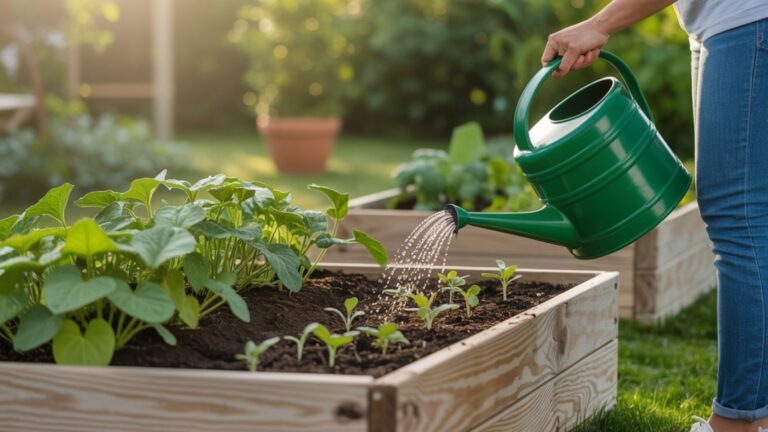
Main point: If the soil is very degraded, raised beds can be a more effective solution than trying to patch the entire ground.
Irrigation
Drip irrigation is usually the most efficient option. It reduces consumption, avoids excessive wetting of the leaves and facilitates management by sectors. In well-designed edible gardens, the irrigation system should respond to different needs depending on the species and sunlight exposure.
Covering or padding
Mulching the soil with organic matter helps conserve moisture, controls weeds, and improves microbial life. In edible landscapes, mulching is not only functional but also provides a more structured and natural visual read.
Biodiversity and biological control
One of the most common mistakes is the belief that a productive garden should be uniform. In fact, diversity is an ally. Combining species attracts beneficial insects, improves resilience and reduces pest pressure.
Some useful practices:
- drawers Honeysuckle With vegetables.
- Includes Aromatic As a natural barrier.
- Rotate crops to avoid soil depletion.
- Avoid large-scale monocultures on small surfaces.
Varied design also has an aesthetic advantage: the garden changes throughout the year, with flowering, fruiting and color diversity enriching the spatial experience.
How does artificial intelligence help in this type of design?
AI tools, such as those that integrate architectural design platforms, are particularly useful in edible gardens because they allow for this Simulate scenarios before construction. This is useful when you have to balance competing variables: sunlight, shade, circulation, species, watering and maintenance.
In practice, AI can support tasks such as:
- Analysis of the direction and occurrence of the sun To locate fruit trees or crop areas.
- Suggest combinations of genres Depending on climate, space and maintenance needs.
- Visualize future growth of trees and shrubs to avoid spatial conflicts.
- Evaluation of distribution alternatives Between ornamental and productive areas.
- Discover measurement problems In small courtyards or terraces.
More than just automating decisions, these tools help you make better decisions. In an edible garden, that means anticipating how the space will look and function six months, a year or five years from now, not just on delivery day.
Concrete ideas for different sizes of space
Small courtyard
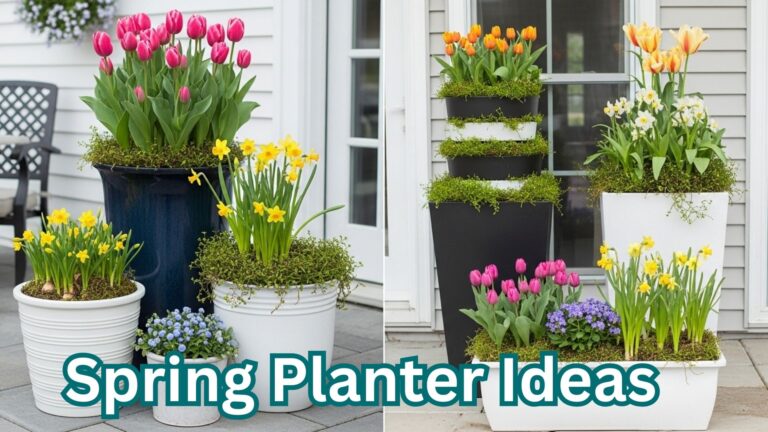
- Deep pots with herbs, strawberries and cherry tomatoes.
- Edible lattice climber.
- A mixed flower bed with edible and aromatic flowers.
Central garden
- One or two fruit trees in a good location.
- Raised beds for seasonal vegetables.
- Permeable paths allow access without compacting the soil.
Big conspiracy
- Areas differentiated by use: production, residence and biodiversity.
- Edible or mixed hedges.
- Shade trees with a productive understory.
A more beneficial, more beautiful and closer landscape
Edible gardens represent a logical evolution of contemporary landscaping: spaces that are not only thought about, but also created Feed, update and connect For people with normal cycles. Their value lies not only in the harvest, but in the spatial quality they generate: shade, texture, scent, seasonality and daily use.
For architects, landscape architects and designers, the challenge is no longer choosing between beauty or productivity, but rather integrating both from the beginning. There, the combination of design standards, plant knowledge and digital support tools can make the difference between a beautiful garden for a few weeks and a living landscape for years.