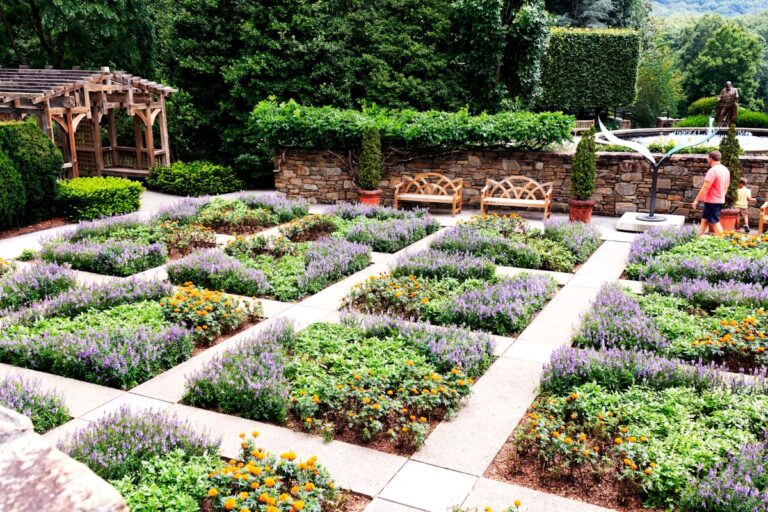
Landscape Lighting: How to make your garden glow at night
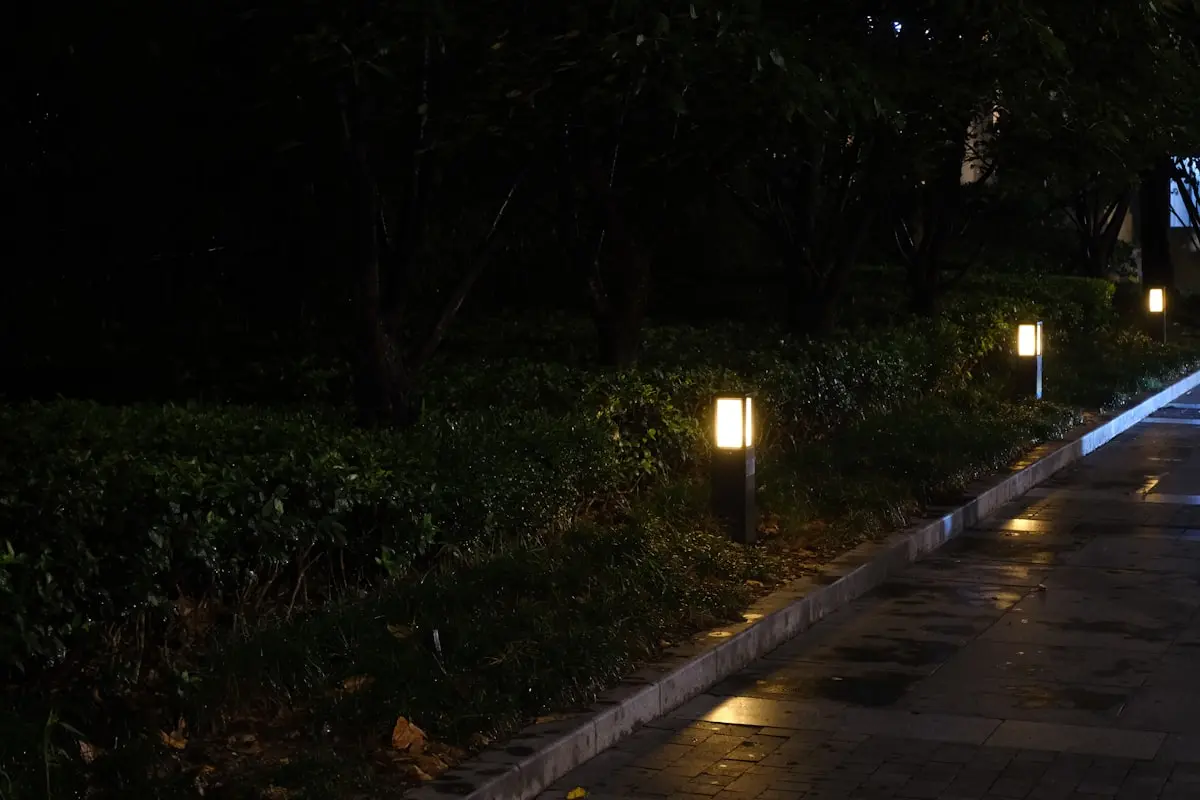
Lighting as part of exterior design
Landscape lighting isn’t just about “putting floodlights” in the garden. Well planned, it changes the experience of outer space: it directs routes, highlights textures, provides security and creates an atmosphere that completely changes when night falls. In a residential project, light can make a small yard seem larger, a tree becomes a focal point, and a porch can truly be used for more hours of the day.
Architecturally, outdoor lighting should be understood as another layer of design, not as a final addition. This means thinking about the relationship between vegetation, sidewalks, facades, furniture and shadows. AI-powered design tools, such as DecorGPT, help accurately visualize these relationships from the early stages, testing night scenes, contrasts and lighting levels before executing work. It does not replace professional judgement, but it does speed up decision-making and reduce interpretation errors.
Basic goals of good outdoor lighting
Before choosing luminaires or color temperatures, it is a good idea to define what you want to achieve. Garden lighting can perform several functions at the same time, but each one requires different solutions:
- Guidance and safety: Illuminate accesses, steps, level changes and paths.
- Functional use: Allowing eating, reading, or gathering on terraces and balconies.
- Aesthetic enhancement: Highlight trees, walls, sheets of water or sculptural pieces.
- Atmosphere: Create a warm, intimate or dramatic feeling depending on the style of the garden.
A common mistake is to try to light everything the same way. The result is usually flat, excessive and unpleasant. The key is to prioritize: not everything has to shine with the same intensity or from the same point.
Types of lighting that should be incorporated
Functional lighting
It is the basis of the system. It is used in traffic areas, stairs, doorways and living areas. It should be enough to see clearly, but without dazzling. Low sconces, recessed floor lamps with controlled optics, and wall lamps with indirect light usually work well.
Decorative lighting
Its goal is to emphasize the elements of the scene. A tree with a wide crown, a prominent facade or a stone wall can gain depth with a bath of side or top light. Here both angle and intensity are important. Too forward light results in flattening of the surface; Well-directed side light reveals texture.
Ambient lighting
This determines the character of the garden. This can be achieved using hidden LED strips, warm luminaires on pergolas, well-built garlands or small points of light evenly distributed. The idea is to suggest the night sky, not compete with it.
How to choose color temperature
Color temperature greatly affects the perception of space. In residential gardens, warm lights tend to work best, including 2700 thousand and 3000 thousandBecause they are more welcoming and better respect the natural tones of plants. Cooler temperatures may make sense in contemporary projects or in areas that require greater visual contrast, but should be used with caution.
Some practical recommendations:
- Warm light For rest areas, terraces and areas with abundant vegetation.
- Neutral light In access where better spatial reading is needed.
- Avoid mixing too many temperatures In the same garden, unless there is a clear design intent.
Color consistency is as important as the amount of light. A garden with well-coordinated colors looks more elegant and organized.
Strategies to illuminate without saturation
One of the biggest challenges is finding balance. A dimly lit garden loses mystery, consumes more energy and can cause visual disturbance. To avoid this, it is recommended to work with layers and vector control.
1. Light from below wisely
Uplight can be very effective for trees, shrubs or vertical elements. However, if abused, it produces harsh shadows and an unnatural theatrical effect. The ideal is to use it at specific points, not all plants.
2. Respect the darkness
It is not necessary that the entire garden be visible. Shadow areas provide depth and make highlights stand out more. This idea, widely present in contemporary landscapes, improves spatial reading and reduces energy consumption.
3. Glare control
Light sources should not be seen directly from living areas. Shields, masks, cavities and asymmetric optics help direct the beam where it really matters.
4. Give priority to the beam direction
A well-directed luminaire can do more than several poorly placed lamps. It is advisable to study the cone of light, the installation height and the distance to the illuminated object. At this point, nighttime renderings and simulations are particularly useful for predicting whether a luminaire will be too visible or whether the light will spread too much.
Materials, plants and shadows: what changes at night
Night lighting reveals qualities that cannot be observed during the day. Natural stone takes on a prominent shape, wood shows grain, water reflects portions of light, and plants reflect very expressive silhouettes. Therefore, it is not enough to shed light on “what is”; You have to read the material and its behavior.
- Rough surfaces: Create richer shades and provide texture.
- Smooth or shiny surfaces: Severe reflections can be produced if the light is poorly directed.
- Dense vegetation: Works well with grazing or backlighting to separate volumes.
- Open canopy trees: They allow very attractive plays of light and shadow.
In well-solved projects, the night does not hide the garden: it interprets it in a different way.
Energy efficiency and maintenance
Aesthetics should not conflict with efficiency. Today there are LED solutions with low consumption, long life and great intensity control. However, technology alone does not guarantee a good result. If the design is poor, energy is wasted and maintenance is complicated.
It is worth keeping in mind:
- Location accessible from lanterns For easy cleaning and replacement.
- Adequate protection against moisture and dust Depending on the environment.
- Ignition division To activate only necessary areas.
- Regulate intensity To adapt the scene to different moments.
A well-thought-out system can be conservative during the day and accurate at night. This duality is one of the great virtues of outdoor lighting.
The role of artificial intelligence in the design phase
Landscape lighting benefits greatly from tools that are able to test scenarios before construction. Platforms like DecorGPT allow you to explore compositions, detect conflicts between lighting and vegetation, and evaluate how night scenes look from different viewpoints. This is especially useful when the project combines architecture, garden furniture and outdoor furniture, because light affects the entire ensemble.
Additionally, AI can help you quickly compare alternatives: a warmer scene versus a more neutral scene, spot lighting versus a more diffuse scene, or a higher-contrast composition versus a more uniform scene. The important thing is not to automate taste, but to expand the possibilities of analysis.
A practical guide to getting started
If you are designing or reviewing garden lighting, this arrangement can serve as a starting point:
- Limits night uses From space.
- Determine routes, visual focus and shadow areas.
- Select a consistent color temperature.
- Combines functional, decorative and ambient lighting.
- Test the scene with simulations or nighttime demos.
- Adjust intensity and directions to avoid excesses.
- Think about maintenance and wear and tear from the beginning.
conclusion
Making the garden “glow” at night is not about filling it with light, but rather about designing a balanced visual experience. The best outdoor lighting is that which accompanies the space without imposing itself, that which allows you to move safely and, at the same time, discover the beauty of plants, materials and proportions.
In this process, architectural standards remain essential, but digital and intelligent tools offer a clear advantage: they allow testing, comparison and fine-tuning before implementation. Thus, the night ceases to be a limit and becomes an opportunity for the garden to show a second version of itself, more intimate, more expressive, well-resolved and unforgettable.