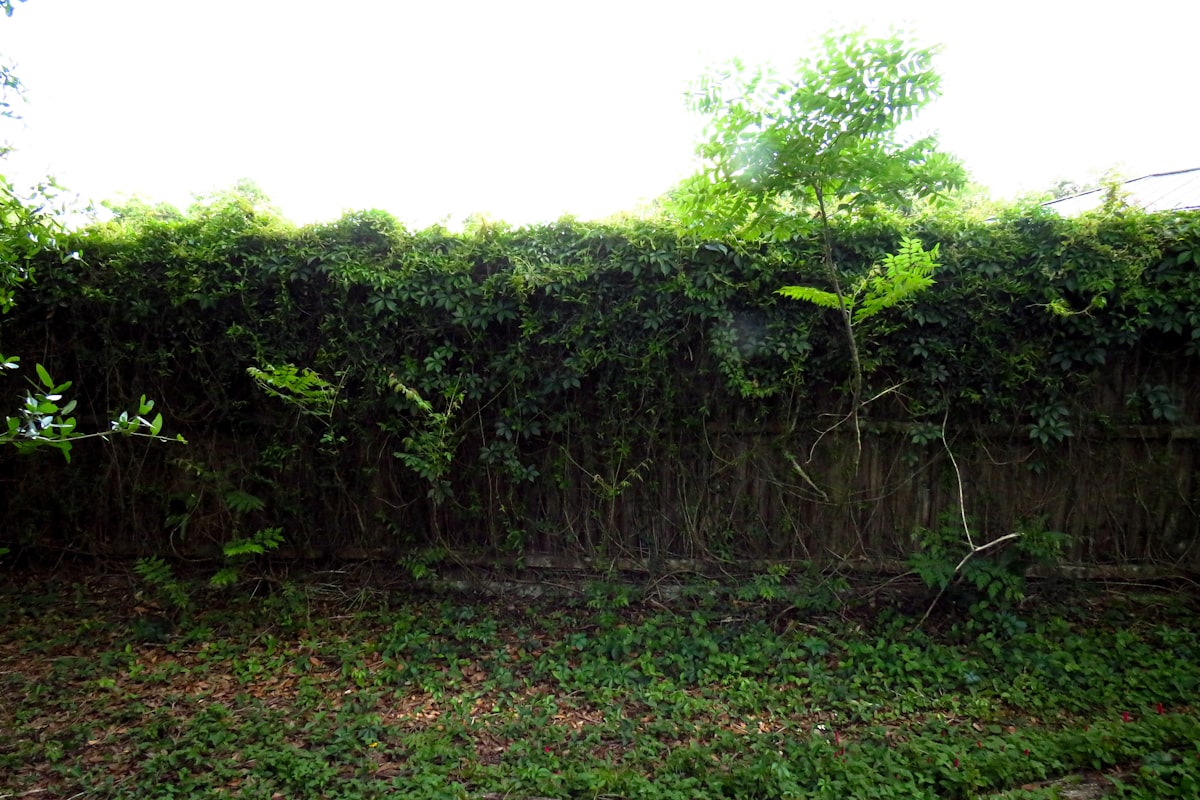
How to create privacy in your garden without a fence

introduction
Having a beautiful yard doesn’t always mean erecting a tall fence around the entire perimeter. In fact, in many cases, external privacy can be best resolved through a combination of… Vegetation, architectural elements, furniture and good distribution of space. The result is usually lighter, more natural and sometimes more economical than a continuous barrier.
Furthermore, when designed with intention, privacy not only protects from prying eyes, it also helps create a sense of sanctuary, improves visual comfort and can identify more visible areas of use. AI-powered design tools, such as DecorGPT, can be very useful for exploring these alternatives before executing work, as they allow you to test different shadow, size, and rotation configurations without improvising.
Before choosing a solution: Know what type of privacy you need
Not all privacy is created equal. Before considering materials or plants, it is advisable to identify the real problem:
- Visual privacy: Neighbors with direct views, high windows, or nearby traffic areas.
- Partial privacy: You want to block off only part of the patio, such as an outdoor dining area or seating area.
- Dynamic privacy: You need solutions that change with the seasons, for example greater coverage in summer and greater openness in winter.
- Soft acoustic privacy: It doesn’t completely eliminate noise, but it can dampen it.
This diagnosis is important because it avoids large-scale solutions. A small yard doesn’t need the same strategy as a large garden, and an urban terrace requires different standards than a single-family home. In design platforms like DecorGPT, this initial analysis can be translated into quick tests of orientation, element height, and relationship to the surrounding scenery.
1. Use plants strategically, not just for decoration
Greenery is one of the most effective ways to create privacy without a fence. But for it to work, it must be seen as Space toolnot as decoration.
Helpful vegetarian options
- Dense hedges: Perfect if you’re looking for a continuous monitor. They work well with evergreen species.
- Tiered shrubs: They allow you to create visual depth and a less solid barrier.
- Containerized or controlled bamboo: It provides a rapid rise, although it requires careful management to avoid invasiveness.
- Drilling machines for light structures: Ideal for covering pergolas, trellises or panels.
- Medium crown trees: Useful for filtering views from above without completely closing off the space.
Good practices
- Combine heights: A single green bar usually appears flat; Three levels generate more intimacy.
- Think about the maturity of the plant: Many species look small at first, but change a lot over time.
- Leave room for maintenance: A neglected plant screen loses density and order.
- Choose species suitable for the climate: If the plant suffers, privacy deteriorates quickly.
A common mistake is planting too close to the border without taking growth into account. This is where previous simulations help a lot: using AI, you can visualize what size the plants will reach in one, three or five years and determine whether a hybrid solution is more suitable.
2. Create visual layers using grids, panels, and lighting displays
If you don’t want a traditional fence, you can use semi-transparent elements that block the view without closing off the entire yard. This strategy works especially well in small spaces, because it avoids feeling confined.
Recommended items
- Wooden or metal clamps With climbing plants.
- Mobile panels To change privacy depending on the time of day.
- Slice screens With controlled breaks.
- External monitors In dining or rest areas.
- Tall farmers Which acts as a base and barrier at the same time.
These solutions have an important advantage: they allow privacy modification. Complete concealment is not the same as simply avoiding direct line of sight. In urban courtyards, this difference greatly improves the perception of spaciousness.
Design advice
Planks work best when they are not evenly laid out in straight lines. A small offset, variable height or angular combination can segment live scenes more effectively and with less material.
3. Reorganizing the courtyard so that privacy is generated from distribution
Often the problem is not the absence of the barrier, but rather its presence Incorrect location of activities. If the most exposed area of the yard becomes the main corridor or living area, the feeling of exposure increases.
Settings that help a lot
- Put Outdoor dining room At the most protected point.
- Reserve the most visible area for secondary functions, such as storage or circulation.
- use Furniture as a filter: Benches with high backs, L-shaped sofas or flower pots between the areas.
- Avoid placing chairs and tables directly toward nearby views or windows.
Good planning can reduce the need for high barriers. Sometimes it’s enough to turn the table 90 degrees, move the pergola, or make a simple change in level to improve privacy.
DecorGPT can be useful here because it allows you to test different spatial configurations and see how the relationship between the area of use and the environment changes. In exterior design, small implementation decisions usually have a greater impact than the element added at the end.
4. Take advantage of the height with pergolas, awnings and light structures
Privacy doesn’t always have to come from the sides. In many arenas, it is better to solve some visual discomfort Partial top coverage.
Solutions that provide privacy
- Pergolas with slats: Filter views from upper floors and generate shadow.
- Extendable awnings: Useful if you need a flexible solution.
- Structures with chrome: Combining shadow and visual closure.
- Sails tense: They provide light protection and a more collected atmosphere.
These options are especially interesting when the problem comes from high windows or adjacent terraces. Instead of closing the entire perimeter, you can control the exposure from the top and keep the sides more open.
Be careful with the ratio
A structure that is too heavy can dwarf the yard. The key is to maintain a scale that matches the size of the space and the geometry of the home. Good exterior design does not add elements by accumulating; He combines them with intention.
5. Use water, texture and lighting to distract attention
Privacy doesn’t always depend on blocking. It can also be achieved Optical focus shifting.
Useful sensory resources
- Small fountains or sheets of water To introduce sound and attract attention.
- Textured materials On low walls, planters or sidewalks.
- Warm and low lighting So that the yard looks more welcoming and less exposed at night.
- Internal contact points Such as a table, a sculpture or a floral composition.
As the eye finds a clear center of interest within the courtyard, perception of outside views diminishes. This does not replace a physical barrier if the problem is severe, but it enhances any privacy strategy.
6. Combine solutions: The most effective privacy is usually hybrid
In practice, the best course of action is rarely a single action. The most effective is usually a combination of three levels:
- Vegetable base To soften the edge.
- Light architectural element To cut direct views.
- Reorganization of use To avoid unnecessary exposure.
For example, a small patio can be solved with tall planters, side netting, and a partial pergola. In a larger garden, a perimeter fence interrupted by trees and a seating area protected by a slatted screen may be sufficient.
This hybrid approach also allows the design to be adapted to budget, maintenance and architectural style. It is not necessary to install everything at once. Sometimes it helps to design in stages and see how the space will actually be used.
7. Think about maintenance, regulations and climate
A beautiful solution that is difficult to maintain ends up losing its effectiveness. Before making a decision, it is worth checking the following:
- Irrigation and plant maintenance.
- Wind resistance Of panels and awnings.
- Durability of materials Against sun and humidity.
- Local regulations On heights, setbacks or outdoor structures.
- Privacy in different seasons: What works in the summer may stop working in the winter.
At this point, assistance with AI-powered design tools is particularly practical. They allow you to compare scenarios with different types, materials and orientations, and anticipate size or maintenance problems before investing.
conclusion
It’s entirely possible to create privacy in your garden without a fence if you think of the space as a set of layers. Plants, light displays, pergolas, furniture and layout can work together to generate intimacy without losing openness or light.
The key is to design wisely: understanding where the views are coming from, what areas need protection, and what type of environment you want to build. With careful planning—and with the support of tools like DecorGPT to visually and quickly explore options—you can achieve a more comfortable, balanced, and more livable yard.